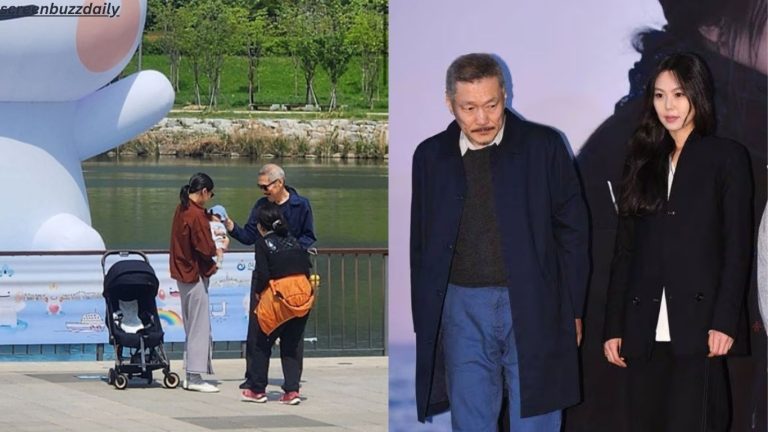
Well-known English education YouTuber Oliver Sam (올리버쌤), with over 2.25 million subscribers, has decided to give up his life as a U.S. immigrant and return to Korea with his Korean wife.
In a recent video titled “한국인 와이프와 미국 이민 8년차…이제는 진짜 포기합니다” (“8 Years into American Immigration with My Korean Wife… We’re Really Giving Up Now”), he explained in detail why the “American Dream” no longer made sense for his family.
This article summarizes the verified details from that video and Korean news coverage, and analyzes the real issues behind his decision:
- Soaring property taxes and insurance in Texas
- A weakening public education system
- A deeply frustrating healthcare experience despite high premiums
- Growing climate and power reliability risks
Outline of This Article
- Who Is Oliver Sam and Why His Story Matters
- The Hidden Cost of Homeownership in Texas
- Property tax shock
- Insurance costs and disaster risk
- “Our Schools Are Collapsing”: Public Education Concerns
- Paying 4 Million Won a Month, But Still No Proper Diagnosis
- Grandfather’s pancreatic cancer case
- Limits of the U.S. healthcare system
- Climate, Power Outages, and the Risk of Raising a Child in Texas
- Why Korea Felt Safer and More Sustainable
- Key Takeaways for Anyone Considering U.S. Immigration
1. Who Is Oliver Sam and Why His Story Matters
Oliver Sam is an American who first became known in Korea as an English instructor, then as a popular YouTuber specializing in English education. He married his Korean wife in 2016 and later moved to the United States, settling in Texas.
After about eight years of life as an immigrant in America, he released a video declaring that he and his wife had decided to return to Korea.
His story is drawing attention because:
- He is not someone who failed financially; he has a large channel and stable income.
- His reasons are structural, not personal: taxes, education, healthcare, and climate.
- It challenges the common belief that living in the U.S. is automatically better than living in Korea.
For anyone researching why Oliver Sam left America, his case offers a detailed, real-world example of the trade-offs involved in U.S. immigration.
2. The Hidden Cost of Homeownership in Texas
2.1 Living on an 8,000-Pyeong Countryside Property
Oliver and his family live in a large countryside home in Texas on a plot of about 8,000 pyeong (a very large lot by Korean standards). At first glance, this looks like a dream: wide open space, nature, and a big house.
However, he explains that just owning the house is becoming financially painful.
2.2 Property Tax: Around $8,000 a Year
According to his video, starting in 2026, his annual property tax alone will be about:
- $8,000 (approximately 11.56 million KRW) per year
This is not mortgage or rent. This is just the tax for owning the property.
In many parts of the U.S., and especially in states with no state income tax like Texas, property tax is a major revenue source, and it can feel extremely heavy for homeowners.
2.3 Home Insurance: Another $4,402 a Year
On top of the property tax, Oliver states that his home insurance premium will be:
- About $4,402 (approximately 6.37 million KRW) per year
Adding tax and insurance together, his family will be paying roughly:
- Around 18 million KRW (over $12,000) per year
only to keep the house they already own.
2.4 Why It’s So Expensive in Texas
Oliver explains one key reason: Texas is highly vulnerable to natural disasters, such as:
- Tornadoes
- Wildfires
- Other extreme weather events
Because of this risk, according to his account:
- Major U.S. insurance companies ranked 1st and 2nd in size avoid providing coverage in his area.
- This leaves homeowners with fewer choices and more expensive policies.
He also mentions projections that these costs could rise by about 15% every year, adding even more uncertainty and long-term financial burden.
For a family planning their future, these rising fixed costs create serious financial anxiety and were one of the main reasons they reconsidered living in Texas.
3. “Our Schools Are Collapsing”: Public Education Concerns
Oliver’s wife highlights another critical issue: the state of public education in their region.
3.1 Budget Cuts and School Closures
According to her, school budgets in their area have been cut significantly. As a result:
- Even large school districts in neighboring major cities have started closing schools.
- This reflects a broader weakening of the public education system, not just an isolated case.
Fewer schools can mean:
- More overcrowded classrooms
- Longer commutes for students
- Less individual attention and support
3.2 Teachers Leaving and Unqualified Replacements
She further explains that:
- Many qualified teachers have quit or been laid off.
- Vacant positions are increasingly being filled by non-certified individuals who do not have teaching licenses.
For parents, this raises serious questions:
- Can they trust the quality of teaching?
- Are students receiving the academic and emotional support they need?
- What will this mean for their child’s long-term development?
For Oliver’s family, the decline of public education became another strong reason to question whether the U.S. was truly the best environment in which to raise their child.
4. Paying 4 Million Won a Month, But Still No Proper Diagnosis
Perhaps the most emotional part of their story involves U.S. healthcare.
4.1 A Grandfather’s Late Pancreatic Cancer Diagnosis
Oliver’s wife shares that her grandfather was eventually diagnosed with terminal pancreatic cancer.
However, prior to the diagnosis:
- He had repeated symptoms suggesting something was wrong.
- He wanted to receive thorough tests and sought medical help.
- It took a long time just to see his primary care doctor.
When he finally did meet the doctor, she recalls him being told something as simple as:
“Eat salt and rest.”
Despite repeatedly requesting detailed examinations, he was not provided with proper testing in time. The result:
- The cancer was discovered only when it had reached a terminal stage.
4.2 High Insurance Premiums, Limited Access
What makes this even more painful, she explains, is that:
- Their family was paying about 4 million KRW (approximately $3,000) per month in health insurance premiums.
In other words, even with very high monthly payments, they could not secure the timely and thorough medical care that might have helped detect the disease earlier.
She concludes with a powerful statement about her impression of the system:
She felt that in this environment, “if you get sick, you become like a disposable item.”
For Oliver and his wife, this experience severely damaged their trust in the U.S. healthcare system, especially as new parents responsible for their child’s health and well-being.
5. Climate, Power Outages, and the Risk of Raising a Child in Texas
Another major factor in their decision was the combination of extreme weather and power infrastructure issues.
5.1 Living Through a Major Power Crisis
Oliver and his wife recall that:
- In Texas, summer temperatures can exceed 40°C (104°F).
- Around two weeks before their child was born, Texas went through a serious power crisis, during which power systems effectively stopped in many areas.
- They mention that around 300 people died in connection with that crisis.
Such large-scale outages, combined with extreme temperatures, create life-threatening conditions, particularly for:
- The elderly
- Infants and pregnant women
- People with pre-existing health conditions
5.2 Fear of Future Blackouts in Extreme Heat
Looking ahead, they fear that similar blackouts could happen again, possibly as soon as:
- The following summer, when 40°C heat is likely to return
As new parents, they found themselves asking:
- Could they keep their baby safe in 40°C heat if the power went out again?
- Would they have reliable air conditioning and basic utilities in extreme weather?
The combination of climate change, increasingly frequent natural disasters, and fragile infrastructure made them question whether Texas was a safe and stable place to raise a child.
6. Why Korea Felt Safer and More Sustainable
Taking all these factors together—housing cost, education, healthcare, and climate—Oliver and his wife decided that returning to Korea was the better long-term choice for their family.
6.1 Stability of Systems in Daily Life
From their perspective, Korea offers:
- More predictable public systems, especially in:
- Healthcare access
- Education quality
- Infrastructure reliability
- Family support networks on the wife’s side, which are valuable for child-rearing.
While Korea has its own challenges, they felt that overall safety, predictability, and social infrastructure were stronger there than in their specific situation in Texas.
6.2 Letting Go of the “Perfect America” Image
Oliver also addresses a common belief in Korea and other countries:
Many people assume that America is a powerful country, so its economy and systems must be safe and problem-free.
His message is that this assumption is not always correct.
The United States has serious structural problems—especially in healthcare, housing costs, public education, and climate resilience—that can significantly affect ordinary families.
For his family, the “American Dream” no longer matched reality, and they chose Korea as the place where they felt more secure and hopeful about the future.
7. Key Takeaways for Anyone Considering U.S. Immigration
Oliver Sam’s decision offers important lessons for those thinking about moving to the United States.
7.1 Questions to Ask Before You Immigrate
If you are considering U.S. immigration, it is wise to carefully research and ask:
- Healthcare
- How much will your health insurance cost each month?
- How easy is it to get timely, thorough tests and specialist care?
- Housing
- What are the property tax rates in your target state?
- How high are home insurance premiums, especially in disaster-prone areas?
- Education
- What is the condition of local public schools?
- Are there budget cuts, school closures, or teacher shortages?
- Environment & Infrastructure
- Are there frequent power outages, heatwaves, floods, fires, or storms?
- How resilient is the local infrastructure?
7.2 Success Is Not Just About Income or Country Name
Oliver’s experience also shows that:
- A higher income or a “famous” country like the U.S. does not automatically guarantee a better life.
- Quality of public services, system reliability, and safety matter just as much as income level.
- For some families, returning home or choosing another country can be a rational, well-considered decision—not a failure.
Conclusion: Why Oliver Sam Left America
To summarize the verified reasons why Oliver Sam left America and chose to return to Korea:
- Exploding housing costs in Texas:
- Around $8,000/year in property tax
- Around $4,402/year in home insurance, with risk of 15% annual increases
- Weakening public education:
- Budget cuts, school closures, and teacher shortages
- Non-certified individuals filling teaching positions
- Deeply frustrating healthcare experience:
- Family paying about 4 million KRW per month in premiums
- Yet a loved one’s terminal pancreatic cancer was not detected early, despite repeated requests for tests
- Climate and infrastructure risks:
- 40°C Texas summers
- A major power crisis shortly before their child’s birth, with about 300 deaths linked to the event
- Fear of future blackouts and inability to protect their child in extreme heat
These combined factors convinced Oliver and his wife that, for their family, Korea offered a more stable and secure future than continuing their life as immigrants in the United States.
His story is a powerful reminder to look beyond the image of the “American Dream” and carefully examine the real systems and risks before making life-changing decisions about immigration.