Who Is Ki Myo-han in The 4th Love Revolution?
In Wavve’s original drama The 4th Love Revolution (also known as LOVE.exe), Heo Jung-do plays Ki Myo-han, the Dean of the College of Engineering at Hangang University. On paper, he is an accomplished academic and a trusted administrator. In practice, he is the single most disruptive force in the story.
What begins as a seemingly odd but harmless bureaucrat quickly evolves into a fully fledged antagonist whose decisions shape every major conflict in the drama.
A Name That Literally Means “Strange”
Ki Myo-han’s name (기묘한) is itself a joke and a hint: in Korean, it literally translates to “strange” or “bizarre.”
This is not just a quirky naming choice. It:
- Reflects his eccentric, off-kilter personality
- Signals the absurdity of the situations he creates
- Sets the tone for a character who feels slightly “off” even before his corruption is revealed
From the moment he appears, the name “Ki Myo-han” tells viewers to expect something unusual—and the drama fully delivers on that promise.
Dean of Engineering Turned Chaos Engine
Formally, Ki Myo-han is:
- Dean of the College of Engineering at Hangang University
- A highly trusted figure among the University Board
- Considered the top candidate to become the next University President
Informally, he is the engine of chaos. His administrative decisions are the starting point for:
- The drama’s core romantic setup
- The clash of student cultures
- The eventual “fight the system” narrative led by the young protagonists
Without Ki Myo-han’s initiatives and schemes, the central premise of LOVE.exe simply would not exist.
The Absurd Merger That Starts LOVE.exe
The story of The 4th Love Revolution begins with a crisis: Hangang University is facing a serious financial downturn. Ki Myo-han’s response to this problem becomes the show’s defining “big idea.”
Merging Computer Engineering and Fashion Modeling
To address the university’s financial troubles, Ki Myo-han masterminds a forced merger between:
- The Computer Engineering Department – filled with logic-driven, introverted students
- The Fashion Modeling Department – populated by stylish, extroverted, image-conscious students
On the surface, this is a wildly mismatched pairing. In narrative terms, it is brilliant:
- It creates instant tension between two opposite cultures
- It provides a natural setup for comedy, conflict, and romance
- It physically forces the protagonists into the same space, pushing them into each other’s lives
This one administrative decision becomes the structural foundation of LOVE.exe.
“Convergence of Technology and Art” – Vision or Excuse?
Publicly, Ki Myo-han presents the merger as a bold, forward-thinking move—an academic “revolution” that will enable a “convergence of technology and art.”
However, the reality is far more cynical:
- The merger is a desperate financial maneuver
- Its real purpose is to secure funding and save the school from bankruptcy
- Students and their education become tools in a strategy to impress stakeholders and keep the institution afloat
This contrast between polished rhetoric and self-serving reality is a key part of his character—and central to the drama’s satirical tone.
Ambition Behind the Smile – Ki Myo-han’s Real Agenda
Ki Myo-han is not loud, explosive, or openly villainous. Instead, he is defined by subtlety.
The “Faint, Mysterious Smile”
One of his signature traits is a “faint, mysterious smile” coupled with an unreadable poker face. This expression:
- Keeps colleagues and students guessing about his true intentions
- Helps him project an image of calm, rational leadership
- Masks the ambition and calculation operating beneath the surface
It is easy for the University Board to interpret this demeanor as stability and competence. Viewers quickly learn that it is also a mask for opportunism.
The Next University President in Waiting
Behind his composed exterior, Ki Myo-han is driven by one goal:
to become the next President of Hangang University.
His actions are consistently aligned with this ambition:
- He designs flashy, “innovative” policies (like the merger) to impress the Board
- He prioritizes institutional survival and personal advancement over student welfare
- He is willing to bend rules and cross lines as long as it supports his climb up the hierarchy
Students are not the focus of his work; they are collateral in his political strategy.
From Eccentric Administrator to Central Antagonist
Initially, Ki Myo-han may appear to be just an eccentric, slightly incompetent bureaucrat whose wild ideas inconvenience everyone. As LOVE.exe progresses, the drama reveals a darker layer.
The Corruption Behind the App Development Competition
The turning point in his arc is a storyline involving a university “App Development Competition.”
What seems like a modern, student-focused initiative is revealed to be tied to:
- Financial corruption
- Misuse of funds connected to the competition
- A broader pattern of unethical behavior within the administration
Through this plot thread, Ki Myo-han is no longer just the cause of an absurd academic policy—he becomes the embodiment of institutional corruption.
The Students Who Fight Back
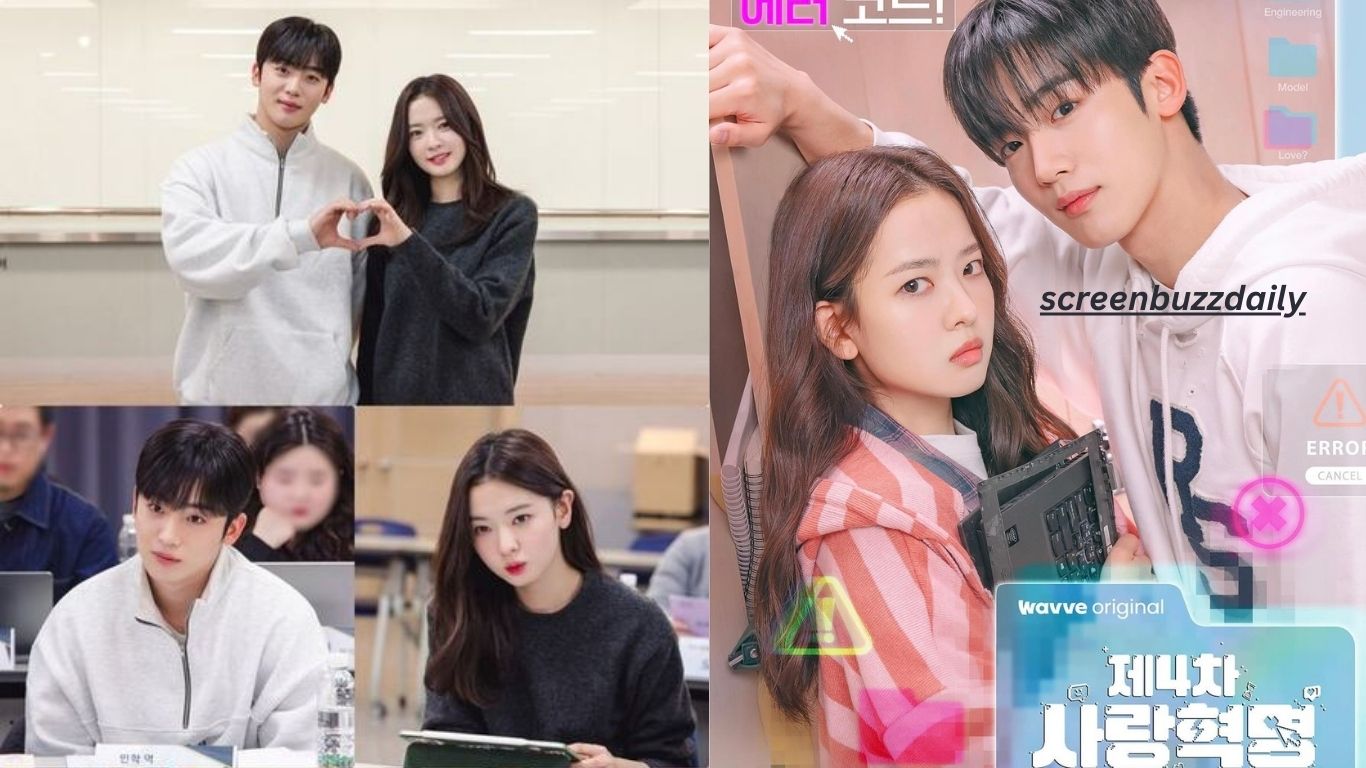
At the heart of The 4th Love Revolution are its young leads, played by Kim Yo-han and Hwang Bo-reum-byeol.
As the series builds toward its climax:
- The student protagonists uncover the truth behind the App Development Competition
- They team up to investigate and expose Ki Myo-han’s misconduct
- Their romantic and personal growth becomes intertwined with their shared mission to “fight the system”
Ki Myo-han’s corruption gives the protagonists a common enemy—and a cause bigger than themselves.
Downfall and Forced Resignation
In the finale, the students’ efforts pay off:
- Ki Myo-han’s financial misconduct is brought to light
- His once-polished image collapses under the weight of evidence
- He faces justice in the form of a public downfall and forced resignation from his position
Narratively, his fall is more than just punishment for a villain. It symbolizes:
- A rejection of rigid, corrupt authority
- A moment of victory for youth, collaboration, and integrity
- The completion of his arc from “strange dean” to fully exposed antagonist
Heo Jung-do’s Performance: Comedy, Satire, and Villainy
Ki Myo-han could have easily been a one-note caricature. Instead, Heo Jung-do crafts a performance that is both entertaining and unsettling—perfect for the drama’s satirical tone.
Visual Style – The Slightly Off Professor Look
Visually, Ki Myo-han fits the archetype of a university dean:
- He wears classic suits that match the “professor” or “administrator” image
- His appearance is clean and respectable, aligned with his status
But there is a subtle twist:
- His energy feels slightly off-kilter, echoing his name’s meaning (“strange”)
- The contrast between his respectable look and bizarre decisions enhances the comedic absurdity of his character
Costuming supports the idea that he is both the adult in the room and the source of the problem.
Deadpan Comedy With a Villainous Edge
Heo Jung-do’s acting style for Ki Myo-han balances:
- Deadpan comedy – dry line delivery, unshakable calm in ridiculous situations
- A subtle villainous edge – hints of coldness and calculation beneath the humor
This duality allows him to:
- Ground the drama’s ridiculous premise in believable human behavior
- Make bureaucratic scenes unexpectedly engaging
- Shift seamlessly from mildly annoying administrator to morally compromised villain
His performance also captures the frustration of faculty members caught between policy, politics, and practical reality—all while being the architect of the students’ misery.
Part of a “Scene-Stealing” Ensemble
Heo Jung-do has been noted as part of a “scene-stealing corps” within the drama:
- His presence elevates scenes that might otherwise be purely expository
- His choices in timing, expression, and tone make administrative meetings and policy announcements compelling to watch
- As a supporting actor, he adds weight and nuance that make the world of LOVE.exe feel more lived-in and believable
In a series that blends romance, comedy, and satire, his performance serves as a crucial anchor.
Why Ki Myo-han Matters to The 4th Love Revolution
Beyond plot mechanics, Ki Myo-han fulfills an important symbolic and thematic role in LOVE.exe.
The Adult in the Room Who Is Actually the Problem
On the surface, Ki Myo-han is:
- The authority figure
- The voice of “reason,” “efficiency,” and “innovation”
- The adult who is supposed to guide students and protect the institution
In reality, he represents:
- A rigid, corrupt, and illogical system
- Institutional priorities that favor image and funding over people
- The kind of leadership that young people must resist, challenge, and ultimately replace
He personifies the very structure the protagonists must push against to grow.
Without Ki Myo-han, There Is No Story
Ki Myo-han is not just a background administrator; structurally, he is indispensable:
- He initiates the department merger that brings together the drama’s contrasting student groups
- His policies and ambitions create the external pressure that forces the leads to collaborate
- His corruption provides the central conflict that unites them in a shared cause
He is both:
- The spark that ignites romantic and interpersonal tension, and
- The obstacle that drives the “revolution” in The 4th Love Revolution
What Viewers Can Take Away From His Character
Through Ki Myo-han, LOVE.exe delivers commentary on contemporary institutions:
- Universities and organizations can hide desperation and dysfunction behind the language of “innovation” and “convergence”
- Ambitious leaders may prioritize personal advancement over the communities they serve
- Real change often starts when young people recognize that “the adult in the room” might be part of the problem, not the solution
In the end, Ki Myo-han is memorable not just because he is bizarre, but because he feels uncomfortably familiar—echoing real-world systems and authority figures that many viewers will recognize.
Production Context: Why This Character Fits LOVE.exe So Well
The 4th Love Revolution (LOVE.exe) is a Wavve original series, released from November 13, 2025 to December 4, 2025, with a total of 16 episodes (aired at a rate of four per week).
It is directed by Yoon Seong-ho, known for satirical black comedies such as Political Fever. That background is crucial to understanding Ki Myo-han:
- The character’s bureaucratic absurdity aligns with Yoon’s signature style
- The blend of sharp satire and campus romance allows Ki Myo-han to be both funny and unsettling
- His story arc fits the director’s interest in exposing flawed systems through darkly comedic storytelling
Heo Jung-do’s portrayal of Ki Myo-han is a natural extension of this creative vision—turning a campus rom-com setup into a pointed critique of institutional power.
Conclusion
Heo Jung-do’s Ki Myo-han is one of the most pivotal figures in LOVE.exe (The 4th Love Revolution):
- As the Dean of Engineering, he is the architect of the absurd department merger.
- As an ambitious administrator, he drives the university’s politics and policies.
- As a corrupt antagonist, he becomes the system the young protagonists must expose and overthrow.
Through a carefully calibrated performance—mixing deadpan comedy with underlying menace—Heo Jung-do transforms Ki Myo-han into:
- A scene-stealing supporting character
- A credible central villain
- A sharp symbol of the rigid, illogical, and corrupt systems that today’s youth are increasingly unwilling to accept
For viewers interested in character-driven storytelling, satirical takes on academia, or simply powerful supporting performances in K-dramas, Ki Myo-han stands out as one of the most intriguing reasons to watch The 4th Love Revolution.