Why “best 2025 startup k dramas” are trending now
Startup K-dramas feel more real in 2025 because people relate to unstable jobs, side hustles, and fast-changing markets. These stories show how founders make tough choices when money is tight and pressure is high. Instead of fantasy success, they focus on daily survival, teamwork, and personal sacrifice.
Many viewers also love how business plots create natural tension. Every pitch meeting, hiring decision, and debt deadline becomes a cliffhanger. Even if you do not run a company, you understand the fear of failing and the hope of starting again. That is why startup dramas keep growing in popularity.
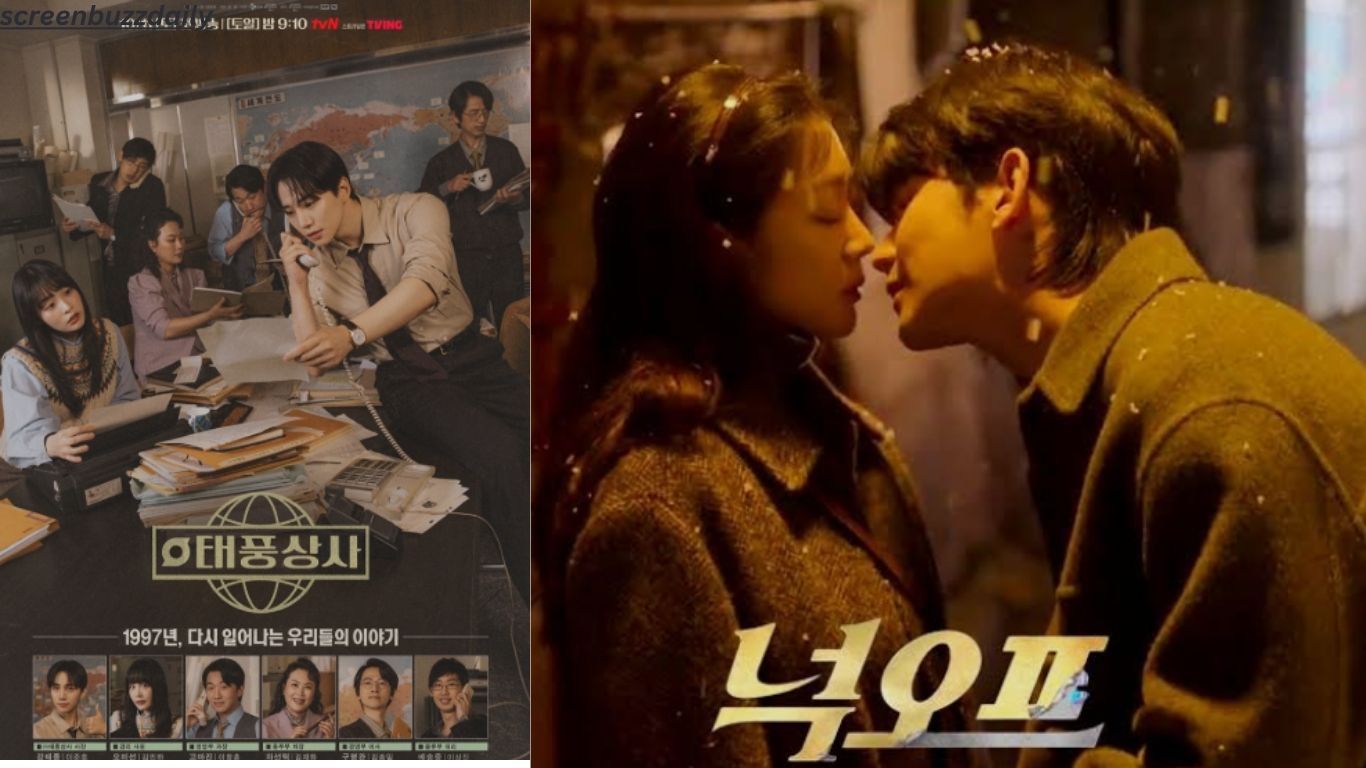
Typhoon Family (태풍상사) — IMF crisis startup survival drama
Typhoon Family feels like a warm family story, but it is built on a national financial disaster. The drama is set during the 1997 IMF Crisis, when many Korean businesses collapsed. Instead of tech apps and investors, this show focuses on basic business survival and the emotional cost of keeping people employed.
The tone mixes retro community vibes with serious financial pressure. It shows how a company can be forced to change overnight, not because it wants to innovate, but because the economy gives no choice. If you like human drama plus realistic money problems, this is a strong pick.
Cast and characters (Lee Jun-ho, Kim Min-ha, Sung Dong-il)
Lee Jun-ho plays Kang Tae-poong, the founder’s son who becomes CEO too early. He has big dreams and lots of confidence, but he lacks the detailed skills needed to manage a crisis. Watching him mature is a big part of the story, especially when every mistake has a real cost.
Kim Min-ha plays Oh Mi-seon, an accounting and bookkeeping employee who brings reality into every plan. She understands numbers and risk, and she refuses to let emotion destroy the company. Sung Dong-il plays Kang Soo-dae, the original founder, representing the old business generation shaken by a new economy.
Plot deep dive: 1997 IMF crisis, pivoting a family business
Typhoon Company is drowning in debt as inflation rises and the economy collapses. When Tae-poong’s father falls under the pressure, the son must lead without experience. The show highlights practical problems like dealing with creditors, protecting staff jobs, and trying to keep suppliers when everyone around you is failing.
The “startup angle” is the pivot. Tae-poong has to rethink how the business makes money, how it buys materials, and how it sells products in a shrinking market. It is entrepreneurship without glamour—just hard choices, fast learning, and constant negotiation.
Startup lessons: cash flow, debt, leadership under pressure
This drama teaches that cash flow matters more than big speeches. Tae-poong’s vision only works if numbers support it, and Mi-seon’s role shows why finance workers are the backbone of survival. You also see how reputation changes when money is involved—partners may disappear, and new allies may appear.
Leadership here is not about charisma; it is about responsibility. Tae-poong must grow from a protected son into a decision-maker. The story shows how founders are shaped by crisis, especially when every decision affects families, not just profits.
Knock Off (넉오프) — high-stakes “illegal startup” and moral gray zone
Knock Off turns the startup journey into something dark and thrilling. It follows a smart man who loses stability during the IMF era and chooses an illegal path: counterfeiting. The show treats this like a business rise story, but with constant danger, guilt, and enforcement closing in.
The vibe is intense, gritty, and fast-moving. It explores how entrepreneurship skills can be used for good or harm. If you like crime mixed with business strategy, Knock Off stands out among the best 2025 startup k dramas for its moral tension.
Cast and characters (Kim Soo-hyun, Jo Bo-ah, Yoo Jae-myung)
Kim Soo-hyun plays Kim Seong-jun, a former office worker with sharp business instincts. He is not shown as careless—he is methodical, strategic, and focused on growth. That makes his choices more complicated because he is clearly talented, even when doing something illegal.
Jo Bo-ah plays Song Hye-jung, his ex-girlfriend and a special judicial police officer targeting counterfeit goods. Their history adds emotional pressure to the chase. Yoo Jae-myung plays Kim Man-sik, Seong-jun’s father, who introduces him to the “fake goods” world.
Plot deep dive: scaling a counterfeit empire
The story spans from the late 1990s into the 2000s and tracks how the counterfeit market evolves. Seong-jun treats counterfeiting like a real startup: he studies fashion trends, sets up production, manages distribution, and expands from small local sales into something much bigger.
The tension rises as growth creates more exposure. The more he scales, the harder it is to hide. At the same time, Hye-jung’s job puts her directly in his path. The drama builds suspense by mixing business expansion with the risk of being caught.
Startup lessons: supply chain, distribution, risk, ethics
Knock Off shows how supply chains and logistics are power. Even though the product is illegal, the business mechanics mirror real entrepreneurship—manufacturing, quality control, brand demand, and international expansion. It highlights how scaling is not only about profit but also about increasing risk.
The key lesson is ethical: being skilled is not the same as being right. The drama pushes you to ask where ambition should stop. It is a reminder that “market demand” is not a moral excuse, even when the business plan works.
Kick Kick Kick Kick (킥킥킥킥) — creator economy startup sitcom
Kick Kick Kick Kick is a comedy, but it is also a sharp look at modern content work. It follows two people who are basically out of options and decide to build a small production company. The humor comes from daily disasters, but the pressure feels real because the business is always close to failing.
This drama fits people who like fast episodes, awkward teamwork, and workplace chaos. It also reflects how 2025 careers work for many creators: low funding, constant pitching, and hoping one viral success can change everything.
Cast and characters (Ji Jin-hee, Lee Kyu-hyung)
Ji Jin-hee plays a “fallen legend” actor who used to be famous but lost popularity and money. He wants a comeback badly, yet his ego makes teamwork difficult. That creates many of the show’s funniest conflicts, especially when he has to do cheap, messy projects to survive.
Lee Kyu-hyung plays a PD (producer) with real skill but a tough personality. After leaving the broadcasting system, he tries to run his own company. Their partnership works because they need each other, but it is unstable because both carry pride and frustration.
Plot deep dive: bootstrapped production company chaos
The company is built with almost no funding, so every decision is a trade-off. They pitch ideas to skeptical investors, chase small gigs, and stretch tiny budgets to create content. The show uses specific funny examples, like trying to film “big” scenes with almost no money, which reflects real creator struggles.
Each episode focuses on a new problem: bad clients, team drama, broken equipment, or ideas that sound good but fail in real life. Their main mission stays clear—create a viral hit before the company collapses completely.
Startup lessons: pitching, budgeting, viral growth pressure
This drama highlights the harsh math of the creator economy: views equal survival. It also shows that pitching is a skill, not luck. You have to explain your idea clearly, prove it can make money, and convince others even when your past work is messy.
The budgeting lessons are simple but valuable. Small teams must prioritize what the audience actually sees and cares about. It also shows how burnout builds when you always chase trends, because “viral” is never guaranteed.
Love Scout / My Perfect Secretary (나의 완벽한 비서) — CEO life, hiring, burnout
Love Scout is a workplace romance, but the business side is real and central. The story follows a powerful CEO in the recruitment world and the secretary who helps stabilize her life. It flips the usual dynamic by making the woman the high-powered leader and the man the emotional support expert.
Among the best 2025 startup k dramas, this one focuses on leadership health. It shows that success can still feel empty when your schedule controls you. The romance works because it grows through daily work and real-life support, not fantasy rescues.
Cast and characters (Han Ji-min, Lee Joon-hyuk)
Han Ji-min plays Kang Ji-yoon, CEO of a headhunting firm called “People’s Networks.” She is excellent at reading talent and closing deals, but she is exhausted and lonely. Her personal life is neglected because her company always comes first, and she does not know how to rest.
Lee Joon-hyuk plays Yoo Eun-ho, a single father who is organized, nurturing, and emotionally steady. He becomes her secretary and handles daily chaos in a calm way. His strength is not dominance, but consistency, care, and discipline.
Plot deep dive: headhunting business and leadership stress
The drama explores recruitment from the inside: how companies fight for talent, how private salary negotiations work, and why a single hire can change a firm’s future. Ji-yoon is responsible not only for profit but also for people’s careers, which adds heavy emotional pressure.
At the same time, her burnout grows. Eun-ho becomes a support system who manages schedules, boundaries, and basic life structure. The show makes it clear that a successful founder can still be struggling in private, even while winning publicly.
Startup lessons: recruiting, negotiation, founder burnout recovery
Love Scout shows that hiring is strategy. The right candidate can unlock growth, and the wrong one can cause months of damage. It also highlights negotiation as a relationship skill, not only a numbers game, because trust and timing often matter as much as salary.
The biggest lesson is burnout. The drama suggests founders must “recruit” support in their own lives, not just for the company. Sustainable leadership requires rest, systems, and people who can carry weight with you.